English


Comprehensive Overview
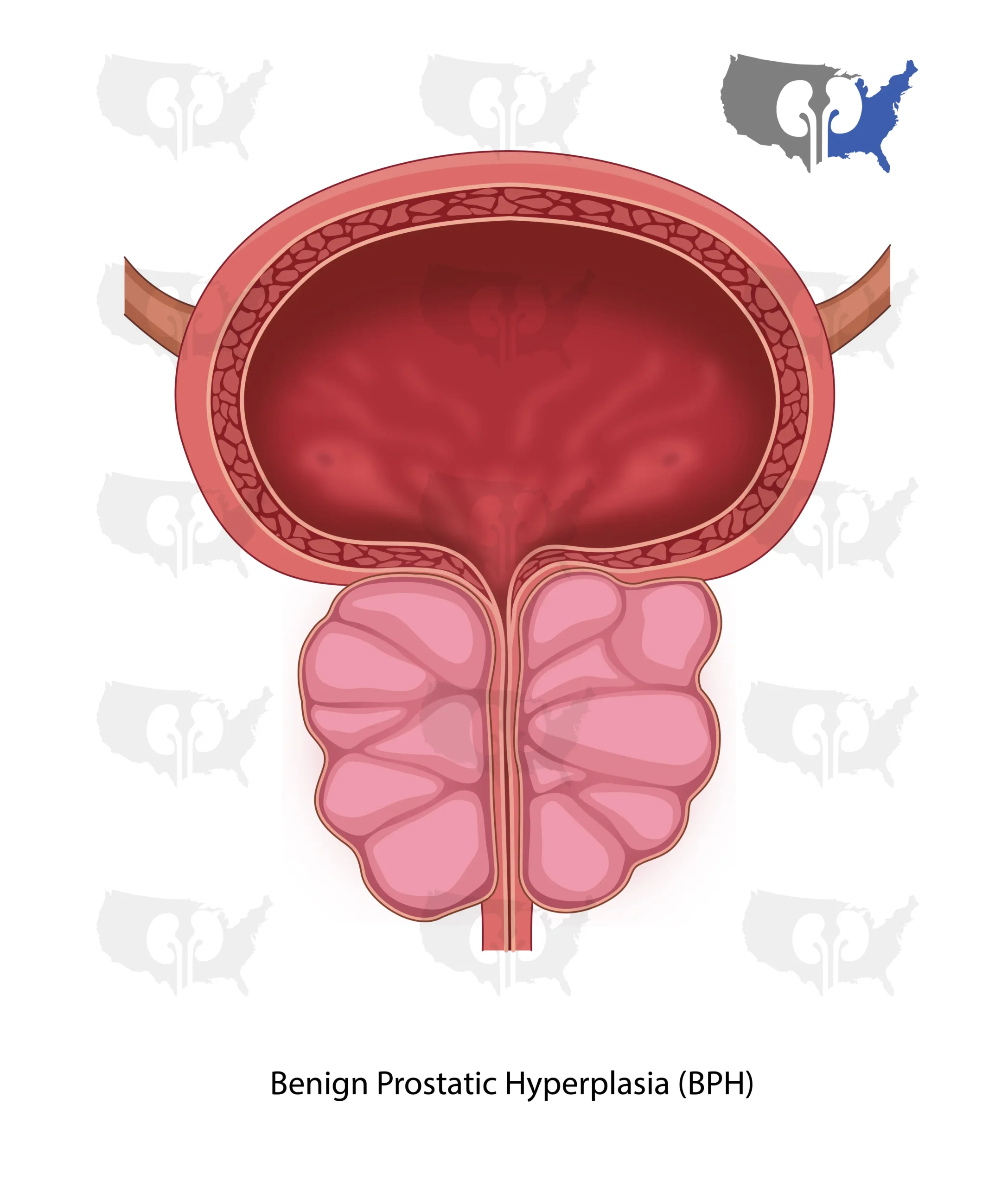
Benign prostatic hyperplasia (BPH) is a non-cancerous enlargement of the prostate gland that commonly occurs as men age. The prostate surrounds the urethra, which carries urine from the bladder out of the body. As the prostate enlarges, it can compress the urethra and lead to urinary symptoms, which can affect quality of life.
Symptoms of BPH
Common symptoms of BPH include:
- Difficulty starting urination or a weak urine stream
- Frequent urination, especially at night (nocturia)
- The sensation of incomplete bladder emptying
- Urgent need to urinate
- Dribbling of urine after finishing urination
- Straining to urinate
- Urinary incontinence
Diagnosis
To diagnose BPH, your Crossroads Urology provider will perform a thorough evaluation, which may include:
- Digital rectal examination (DRE): To assess the size of the prostate
- Blood tests: To check for prostate-specific antigen (PSA) levels and rule out other conditions
- Urine tests: To identify any urinary tract infections or other issues
- Imaging studies: Ultrasound or other imaging may be used to visualize the prostate
Treatment Options
Treatment for BPH depends on the severity of your symptoms and the impact on your daily life. At Crossroads Urology, we offer a range of options:
- Lifestyle changes: For mild cases, lifestyle adjustments such as reducing caffeine and alcohol intake, double voiding, and bladder training may help manage symptoms.
- Medications:
- Alpha-blockers: These relax the muscles of the prostate and bladder neck, making urination easier.
- 5-alpha reductase inhibitors: These reduce the size of the prostate over time by inhibiting hormone changes.
- Minimally invasive procedures: Procedures such as transurethral resection of the prostate (TURP) or laser therapies may be necessary if medications are ineffective.
- Surgery: In more severe cases, surgery may be required to remove part of the prostate.
Managing BPH with Crossroads Urology
At Crossroads Urology, we understand the challenges that come with BPH and offer personalized treatment options to improve your quality of life. Our expert team will work closely with you to manage your symptoms and explore the best treatments based on your specific needs.